
There are occasions when a single legal case evolves into something much larger than the individuals whose names appear in the headlines. It becomes an opportunity to reflect upon the relationship between governmental authority, constitutional safeguards, and the enduring principles that define justice in a democratic society. This is one such reflection.
From somewhere deep within the labasse of noise, stench, speculation and decay, I find myself asking one simple question.
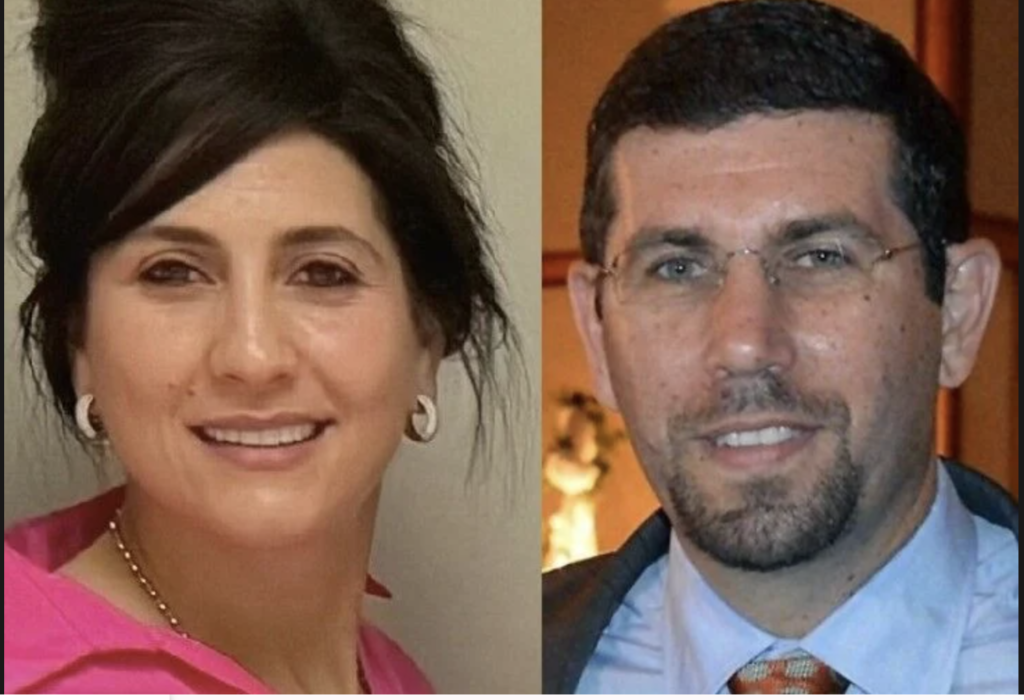
𝗪𝗛𝗬 𝗔𝗥𝗘 𝗧𝗛𝗘 𝗛𝗔𝗗𝗘𝗘𝗗𝗦 𝗦𝗧𝗜𝗟𝗟 𝗜𝗡 𝗝𝗔𝗜𝗟?
It is not born out of macociousness. It is not because I have any fascination with the private affairs of another family. Nor is it because I have suddenly become a constitutional lawyer or political commentator.
Quite the contrary.
If there is one thing that has quietly followed me throughout my life, it is an almost stubborn desire to pause before arriving at certainty. I have learned that public opinion often outruns the evidence, politics frequently overtakes perspective, and headlines have an unsettling way of becoming accepted as verdicts long before a courtroom has spoken.
Whenever justice collides with politics, media narratives, public outrage and competing certainties, something inside me quietly slows down. I become less interested in who is shouting the loudest and more interested in whether anyone has paused long enough to separate fact from assumption. Over the years I have come to appreciate that there is often a considerable distance between an allegation, a headline, a television panel discussion, and the final judgment of a court.
Perhaps that has always been my peculiar way of looking at the world.
I do not rush comfortably toward conclusions. I wander through them. I question them. I sometimes argue with myself before I ever challenge anyone else. I read one report, then another. I listen to opposing viewpoints, not because I expect them all to be correct, but because somewhere between certainty and uncertainty there is usually a small place where perspective quietly waits.
That is where I have found myself throughout this unfolding matter involving Dominic and Genevieve Hadeed.
Like everyone else, I have watched the headlines multiply. I have listened to politicians defend their positions, attorneys defend their clients, commentators defend their opinions, and social media defend almost everything except restraint. Every passing day seems to produce another layer of certainty, yet strangely, I find myself becoming less certain, not more.
I have no privileged access to intelligence reports. I have not sat in the rooms where investigators present evidence. I have not examined affidavits that may never become public. Everything I know has arrived through the same newspapers, broadcasts, interviews and official statements available to every other citizen.
With no concept, and with no absolute details—only the media, the social media mouthpieces, the accusations, the high-profile teams, the rancor between political enemies on broadcast, and the level of mauve lange that you see spewed with cabal language and fire-spitting tongue wagging—it takes a view from the pit of the labasse of stench and decay to ask a plain question. Perhaps that is all any ordinary citizen can honestly do. We stand somewhere between official statements and public opinion, trying to separate evidence from emotion, facts from performance, and justice from the theatre that so often surrounds it.
And yes, I can fully expect that by sharing these thoughts there will be those who take complete liberties with cussing me out, assigning motives I do not possess, and decorating the comments with every colourful dialectic expression and worldly slang imaginable. That has almost become the modern admission fee for anyone who dares to ask a question without first pledging allegiance to one side or the other.
So be it.
Perhaps that is why I hesitate whenever I hear people speak as though the matter has already been concluded. I cannot honestly declare the Hadeeds innocent. Neither can I honestly declare them guilty. That responsibility does not belong to me, and I would be overstepping both my understanding and my conscience if I pretended otherwise. My place is much smaller than that. I am simply one citizen observing, reading, listening, questioning, and trying to make sense of what the rest of the country is also attempting to understand.
Perhaps that is why this one thought refuses to leave me. It quietly returns each day, not demanding an answer as much as inviting one. Beneath all the headlines, all the political exchanges, all the legal language, and all the public certainty, I find myself returning to the same plain question.
𝗪𝗛𝗬 𝗔𝗥𝗘 𝗧𝗛𝗘 𝗛𝗔𝗗𝗘𝗘𝗗𝗦 𝗦𝗧𝗜𝗟𝗟 𝗜𝗡 𝗝𝗔𝗜𝗟?
Yes, I appreciate that lawyers may immediately correct my choice of words, and I would expect them to. They would quite properly explain that preventive detention is not legally synonymous with serving a sentence after conviction, and I accept that there is an important constitutional distinction between the two. But then, almost without permission, my humanity quietly interrupts my legal education. It reminds me that while the law must speak with precision, ordinary people often speak from lived experience. We do not first reach for legal terminology; we reach for what we see. And what we see are human beings waking up each morning behind prison walls, returning to the same prison cell each night while the legal process continues its course. Perhaps the law quite correctly calls that preventive detention. Yet I suspect many ordinary citizens, standing where I stand, would simply describe it as serving jail time.
Again, perhaps I am too simple-minded. Perhaps there is something within the legal framework that I have failed to appreciate. If so, I remain entirely willing to learn. But learning has never required silence, and curiosity has never been an enemy of justice.
If this were my mother… my father… my sister… my brother… my son… or my granddaughter, I know I would not be comforted merely by being told that extraordinary powers were available to the State. I would be searching for every constitutional safeguard, every judicial review, every appeal, every lawful mechanism capable of asking whether those extraordinary powers continued to satisfy the equally extraordinary responsibility that accompanies them. Not because I believed my loved one incapable of wrongdoing, but because constitutions were never written only for those we believe are innocent. They were written for every citizen.
Perhaps that is the thought that refuses to leave me.
Throughout my lifetime I have watched Trinidad and Tobago prosecute allegations involving murder, gang violence, organised crime, corruption, financial offences and every imaginable form of criminal conduct. Some accused persons remained incarcerated. Others obtained bail. Some were acquitted. Others were convicted. Every case found its own path through the courts.
Yet I cannot remember another moment that has caused me to pause in quite this way. Maybe it is the State of Emergency. Maybe it is the extraordinary nature of preventive detention. Maybe it is because politics now seems to occupy the same public stage as criminal allegations, making it increasingly difficult for ordinary citizens to distinguish constitutional necessity from political theatre. Or perhaps I simply do not know enough.