KAMLA LOVES DELCY
First Dey Say She Bad… From Persona Non Grata to “I Love Her”
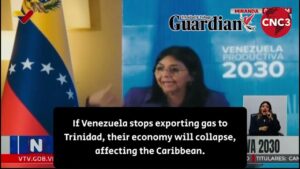
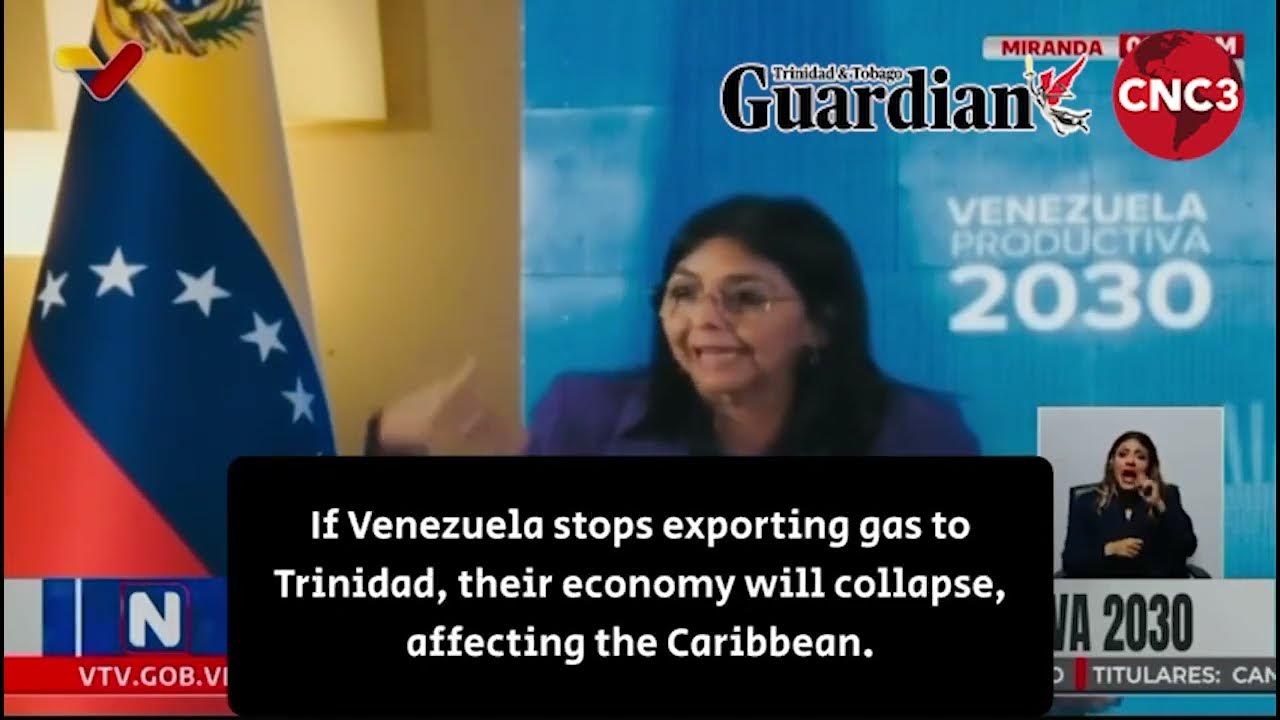
VIDEO CONTEXT: Delcy Rodríguez’s October 22, 2025 remarks addressing Trinidad and Tobago and Prime Minister Kamla Persad-Bissessar. Original audio in Spanish; English translation added for accessibility and context.
From my sitting perch at my computer, news will find its way to make me a finger-computer-clicking writing warrior.
And today?
Kamla Loves Delcy.
Yes. Prime Minister Kamla Persad-Bissessar, speaking to reporters on September 9, 2026, declared of Venezuela’s Delcy Rodríguez:
“I love her. I look forward to meeting her.”
And as though we needed a little family seasoning added to this sudden diplomatic affection, the Prime Minister reminded Trinidad and Tobago that her mother-in-law is Venezuelan, her two grand-nephews are Venezuelan, and that Trinidad and Tobago and Venezuela have what she described as very close ties.
Uhmm … let’s take a gulp, and pause here.
Because my brain relates immediately to the lyrics of a David Rudder song going back to my feteing years:
“First dey say she bad, then she going mad,
some say she lowqui, I say she jokey.
Jump Up.”
— David Rudder, Jump Up!, Farewell to the Flesh, ℗ 2002 David Rudder
Because somewhere between persona non grata and “I love her,” Trinidad and Tobago appears to have entered another episode of Oscar-performance world theatre.
I couldn’t hold back. I had to write.
POLITICAL MEMORY HAS RECEIPTS
I went searching back through Facebook, remembering when persona non grata itself became part of our national conversation — when even a whole parang song was dedicated to the status bestowed upon Kamla after relations between Trinidad and Tobago and Venezuela deteriorated spectacularly.
This was no minor diplomatic disagreement.
In October 2025, Delcy Rodríguez publicly challenged Kamla Persad-Bissessar over Trinidad and Tobago’s energy relationship with Venezuela and the Prime Minister’s reliance upon Washington and Marco Rubio.
And this is where the video at the top of this post matters.
For those who do not speak Spanish, the video provides the English context to Rodríguez’s October 22, 2025 address at the Venezuela Productiva 2030 Business Expo Forum, which was broadcast live by teleSUR.
Rodríguez warned Trinidad and Tobago that Venezuelan gas was not going to be given away. She challenged the idea that Marco Rubio could somehow provide Venezuela’s gas to Trinidad and Tobago independently of Venezuela, and insisted that any Venezuelan gas exported to this country had to be negotiated with and paid for through Venezuela.
If Trinidad and Tobago wants Venezuelan gas, Trinidad and Tobago has to deal with Venezuela.
Newsday reported Rodríguez accusing Persad-Bissessar of believing Marco Rubio’s promises and warning that Trinidad and Tobago’s economy was deeply dependent upon gas. Days later, the deterioration went beyond political rhetoric.
Venezuela suspended energy-development cooperation with Trinidad and Tobago, including work involving joint natural-gas projects. The political rupture had become an energy rupture.
THE INTERNET RECEIPT
WATCH THE VIDEO.
Listen to the tone. Listen to the words.
Then place October 2025 beside September 2026.“`
At the time, I wrote about what I regarded as the danger of Trinidad and Tobago embracing the militarization of a Caribbean region historically promoted as a Zone of Peace.
My concern was never that Trinidad and Tobago should ignore narcotics trafficking, organized crime or national security. Those are legitimate national concerns. My concern was what happens when national-security rhetoric becomes indistinguishable from an endorsement of lethal force, potentially placing a small Caribbean nation inside the geopolitical confrontation between Washington and Caracas.
FROM THE GRACE NOTES ARCHIVE
“`
WARS OF CONVENIENCE IN A ZONE OF PEACERead the earlier Grace Notes commentary “`
And while that political chasm was widening, another image became important:
Stuart Young with Delcy Rodríguez.
Whatever one’s political allegiance, that image carried diplomatic symbolism. It showed a Trinidad and Tobago political figure personally and visibly engaging Venezuelan leadership at a time when relations between the neighbouring governments had become deeply strained.
That led me on April 24, 2026 to write:
FROM THE GRACE NOTES ARCHIVE
- PRESIDENT TRUMP AND THE GHOST — This Hallowed Fantasy to Be Named on the John F. Kennedy Center for the Performing Arts
 PRESIDENT TRUMP AND THE GHOST This Hallowed Fantasy to Be Named on the John F. Kennedy Center for the Performing Arts Marc Bamuthi Joseph reflects on the John F. Kennedy Center for the Performing Arts, art, memory and the institutional changes that followed the Center’s leadership transition. LET’S SET THE STAGE Here is a rigorous,… Read more: PRESIDENT TRUMP AND THE GHOST — This Hallowed Fantasy to Be Named on the John F. Kennedy Center for the Performing Arts
 - US 𝗪𝗛𝗘𝗡 𝗗𝗜𝗗 𝗕𝗨𝗟𝗟𝗬𝗜𝗡𝗚 𝗕𝗘𝗖𝗢𝗠𝗘 𝗟𝗘𝗔𝗗𝗘𝗥𝗦𝗛𝗜𝗣? 𝗜 𝗛𝗨𝗠𝗕𝗟𝗬 𝗔𝗦𝗞 𝗔𝗠𝗘𝗥𝗜𝗖𝗔: 𝗪𝗛𝗬 𝗜𝗦 𝗔 𝗕𝗨𝗟𝗟𝗬 𝗜𝗡 𝗖𝗛𝗔𝗥𝗚𝗘 𝗔𝗡𝗗 𝗪𝗛𝗬 𝗔𝗥𝗘 𝗢𝗡𝗟𝗬 𝗔 𝗙𝗘𝗪 𝗦𝗧𝗔𝗡𝗗𝗜𝗡𝗚 𝗨𝗣 𝗧𝗢 𝗦𝗔𝗬, “𝗡𝗢𝗧 𝗧𝗢𝗗𝗔𝗬. 𝗡𝗢𝗧 𝗧𝗢𝗠𝗢𝗥𝗥𝗢𝗪.”?
 A face can become part of how an era is remembered. This image accompanies the historical question explored in this essay. WHEN DID BULLYING BECOME LEADERSHIP? I HUMBLY ASK AMERICA:WHY IS A BULLY IN CHARGE — AND WHY ARE ONLY A FEW STANDING UP TO SAY, “NOT TODAY. NOT TOMORROW.”? A NOTE ABOUT THE PHOTOGRAPH… Read more: US 𝗪𝗛𝗘𝗡 𝗗𝗜𝗗 𝗕𝗨𝗟𝗟𝗬𝗜𝗡𝗚 𝗕𝗘𝗖𝗢𝗠𝗘 𝗟𝗘𝗔𝗗𝗘𝗥𝗦𝗛𝗜𝗣? 𝗜 𝗛𝗨𝗠𝗕𝗟𝗬 𝗔𝗦𝗞 𝗔𝗠𝗘𝗥𝗜𝗖𝗔: 𝗪𝗛𝗬 𝗜𝗦 𝗔 𝗕𝗨𝗟𝗟𝗬 𝗜𝗡 𝗖𝗛𝗔𝗥𝗚𝗘 𝗔𝗡𝗗 𝗪𝗛𝗬 𝗔𝗥𝗘 𝗢𝗡𝗟𝗬 𝗔 𝗙𝗘𝗪 𝗦𝗧𝗔𝗡𝗗𝗜𝗡𝗚 𝗨𝗣 𝗧𝗢 𝗦𝗔𝗬, “𝗡𝗢𝗧 𝗧𝗢𝗗𝗔𝗬. 𝗡𝗢𝗧 𝗧𝗢𝗠𝗢𝗥𝗥𝗢𝗪.”?
 - PUT SOME RESPECT ON HER NAME — U.S. Congresswoman Joyce Beatty, the Army of One and the Quiet Power of Standing Fast
 Grace Notes Video Commentary, Grace Notes, Commentary & Reflection, PUT SOME RESPECT ON HER NAME U.S. Congresswoman Joyce Beatty — The Army of One, and the Quiet Power of Standing Fast Back in June, I wrote about U.S. Congresswoman Joyce Beatty (OH-03), Representative for Ohio’s Third Congressional District and an ex-officio trustee of the John… Read more: PUT SOME RESPECT ON HER NAME — U.S. Congresswoman Joyce Beatty, the Army of One and the Quiet Power of Standing Fast
 - 9/11- Genelle Guzman-McMillan: The Impossible Hope in the Intangible
 Grace Notes in Context · September 11 Remembrance Most of us Trinis might possibly not know how incredibly our own lineage is woven into the story of the worst nightmare to have occurred in that mecca of international congruence we call New York City. If we believe the words of our own Trinidad and Tobago… Read more: 9/11- Genelle Guzman-McMillan: The Impossible Hope in the Intangible
 - KAMLA LOVES DELCY — FIRST DEY SAY SHE BAD… FROM PERSONA NON GRATA TO “I LOVE HER”
 KAMLA LOVES DELCY First Dey Say She Bad… From Persona Non Grata to “I Love Her” VIDEO CONTEXT: Delcy Rodríguez’s October 22, 2025 remarks addressing Trinidad and Tobago and Prime Minister Kamla Persad-Bissessar. Original audio in Spanish; English translation added for accessibility and context. From my sitting perch at my computer, news will find its… Read more: KAMLA LOVES DELCY — FIRST DEY SAY SHE BAD… FROM PERSONA NON GRATA TO “I LOVE HER”
DELCY RODRÍGUEZ — A WOMAN OF SHREWD AND STRATEGIC POWER AND STUART YOUNG ALIGNRead the April 24, 2026 Grace Notes commentary “`
AND NOW HERE WE ARE
September 2026.
“I love her.”
Suddenly we are hearing about a Venezuelan mother-in-law, Venezuelan grand-nephews, family connections, neighbourliness, rapprochement and plans being explored for Kamla Persad-Bissessar and Delcy Rodríguez to meet around the United Nations General Assembly in New York.
Persad-Bissessar also expressed confidence that Venezuelan natural gas would eventually come to Trinidad and Tobago and specifically connected that prospect with rapprochement between the neighbouring countries.
Diplomacy requires governments to change course. Mature diplomacy sometimes demands it. Countries cannot afford permanent personal quarrels when geography, energy, trade, migration and national security bind their interests together.
But changing course does not erase the course previously travelled.
That is where my question begins.