MORE THAN WHAT WAS SEEN
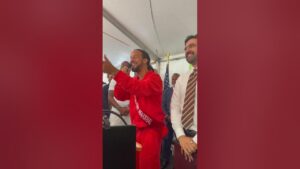
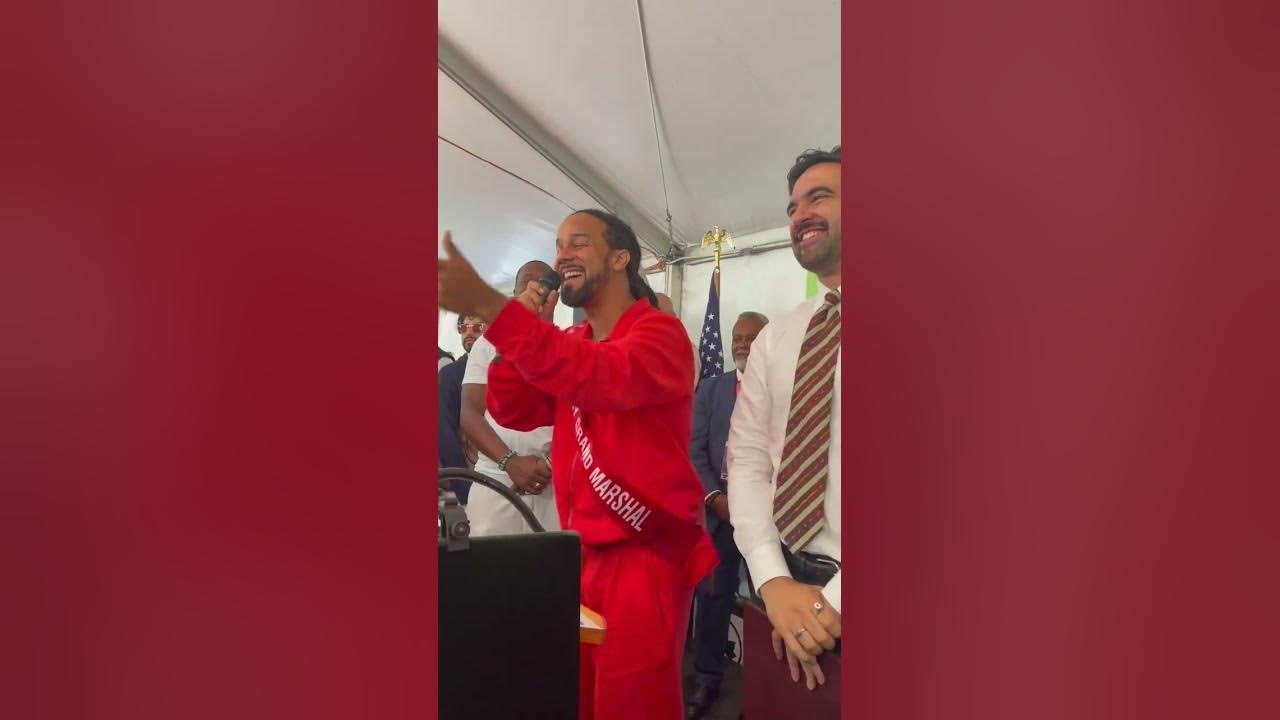
There was something about this Labor Day moment in New York that stayed with me beyond what was actually happening on the stage. Kes was there. Buju was there. Mayor Zohran Mamdani was there. But surrounding them was the full vibrancy and regalia of the Caribbean diaspora—flags and feathers, color and movement, music and memory, generations and islands converging in one enormous cultural space. The personalities were visible, certainly, but what caught my mind’s eye was everything happening around and through them.
Perhaps it was the juxtaposition of the entire weekend. Only days before, Kes had been in Washington, D.C., sharing the DC JazzFest stage with the legendary Stevie Wonder, where I Just Called to Say I Love You found its way into our own Savannah Grass. Then came New York and Labor Day, with Buju Banton carrying the enormous cultural presence of Jamaica, Kes carrying Trinidad and Tobago, and Mamdani standing among them as mayor of a city where Caribbean people have become inseparable from its cultural identity. Different histories, different journeys and different identities, yet surrounding them was something considerably larger than any one person in the frame.
We are also living through a time when political identity seems determined to define almost everything: Democrat, Progressive, Republican, MAGA, left and right. Politics and personality have become intertwined with allegiance, division and spectacle. Against that backdrop came another kind of spectacle entirely—Carnival—and somewhere inside all that color and movement, Kes led with Savannah Grass. That was where, for me, the moment shifted from performance into something almost transcendent.
𝗧𝗛𝗘 𝗦𝗔𝗩𝗔𝗡𝗡𝗔𝗛 𝗜𝗡 𝗠𝗬 𝗠𝗜𝗡𝗗’𝗦 𝗘𝗬𝗘
To a Trinidadian, the Queen’s Park Savannah is more than a beautiful expanse of green in Port of Spain. It is geography layered with memory, culture and common ground. Carnival crosses it; mas, pan, calypso and soca inhabit it. Families, vendors, children, elders, limers, the privileged and the struggling, every complexion, creed and class find themselves moving through the same space. It is one of those places where Trinidad, with all our differences and contradictions, can still imagine itself together, because for all the distinctions we carry into it, the Savannah ultimately belongs to all of us.
So hearing Savannah Grass in that particular setting carried a meaning that perhaps existed only in my own mind’s eye. It sounded like BELONGING—not sameness, but belonging. The Caribbean has never been one homogeneous people. We are Trinidadian and Jamaican, Haitian and Bajan, Grenadian and Guyanese, Vincentian, Dominican, Antiguan, St. Lucian and so much more. We carry different histories, religions, politics, languages, rhythms, wounds and triumphs, and yet there are moments when the music begins and, without surrendering any of those distinctions, we recognize one another.
𝗧𝗛𝗘 𝗙𝗨𝗟𝗟 𝗦𝗨𝗥𝗥𝗢𝗨𝗡𝗗 𝗦𝗢𝗨𝗡𝗗
That was the almost ethereal aesthetic I saw unfolding in this video. Kes, Buju and Mamdani occupied the foreground, but the message seemed to exist in the full surround sound of the moment—the people, the music, the regalia, the flags, the movement, the freedom of cultural expression, the contradictions standing comfortably beside one another, and Savannah Grass somehow flowing through all of it.
Jamaica did not become less Jamaica because Trinidad stood beside it, nor did Trinidad have to diminish itself to belong to something larger. None of the other islands represented in that magnificent sea of Caribbean humanity had to surrender their own cultural identities either. The political differences surrounding our everyday lives had not magically disappeared; for those moments, they simply were not powerful enough to consume the entire space.
Perhaps that is what I found so transcendent. In a world increasingly inclined to draw lines around identity and belonging, what I saw was a cultural space expansive enough to accommodate difference, history, contradiction and celebration without requiring everyone within it to become the same.
THE SPACE ITSELF WAS WIDE ENOUGH.
And suddenly Savannah Grass became, in my mind, more than a Kes anthem or even a Trinidad and Tobago song. It became an unintended metaphor for everything I was watching: there is room on the grass.
Maybe none of this was the intended message. Perhaps that is simply what culture can do when music, people, history and place converge at precisely the right moment. It can say considerably more than anyone standing on the stage intended to say. The individual personalities remain visible, but they cease to be the whole story.