
Initially, I wrote this post as a novice, still finding my footing, unsure which argument deserved my bark or my bite. I wanted room to think before aligning myself with anyone’s opinion, perspective or rationale.
So I let the post sit and marinate. Gave it breathing room while I kept reading, listening and trying to become better informed.
But in the currency of open media, our plates are never empty. Some menus send the taste buds into a frenzy of curiosity. Something catches your attention, and suddenly another question will not leave you alone.
That is what this video did.
After the midterms, the conversation moves from who won to what those entrusted with power will do. I want to understand that transition without being swept along by celebration, anger or the confidence of the loudest voice.
The creator, credited as @byalphajalloh in the supplied transcript, presents donations, lobbying relationships and a voting record to challenge Hakeem Jeffries’ suitability for Speaker. His conclusion is blunt: Jeffries “has been bought.”
That is a serious accusation. I am examining the evidence behind it. My position is that these relationships deserve answers, while the conclusion must be tested rather than adopted because the presentation is compelling.
Watch the video that sharpened my questions
Commentary credited to @byalphajalloh in the supplied transcript. The allegations and conclusions in the video are the creator’s; the discussion below examines what is documented and what still requires an answer.
A historic possibility, with questions attached
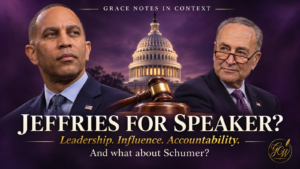
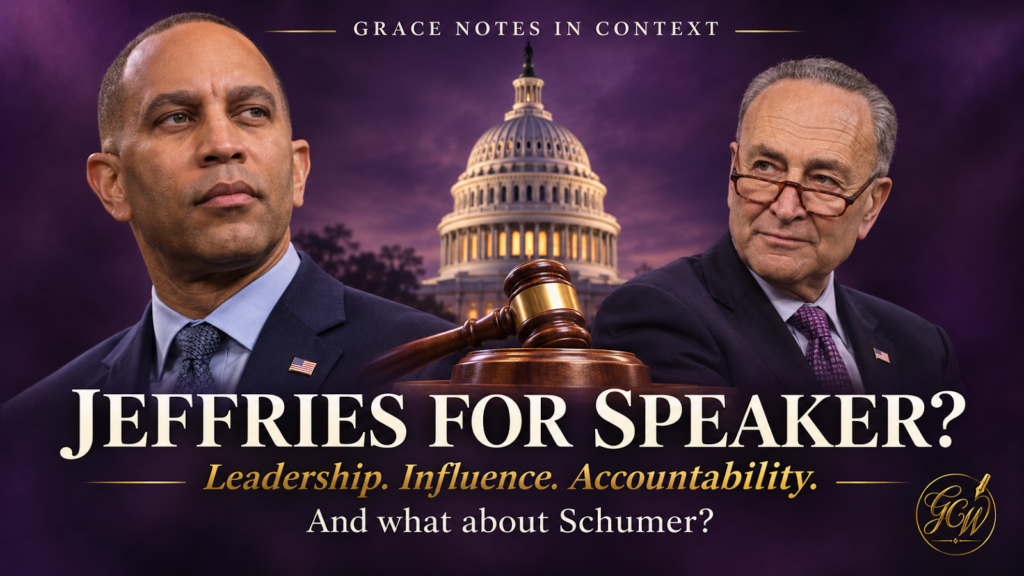
Jeffries formally announced his candidacy for Speaker on November 4. His letter identifies affordability, accountability and American values as priorities. Becoming the first Black Speaker would carry profound historical significance. [1]
I can recognise that significance and still ask difficult questions about the person seeking the gavel.
History does not exempt anyone from scrutiny. Neither should scrutiny erase a person’s accomplishments.
The video reaches back to Jeffries’ work addressing New York’s stop-and-frisk database. Contemporary advocacy records identify him as the Assembly sponsor of legislation aimed at preventing police from retaining identifying information about people stopped and released without arrest or a summons. That was a specific privacy protection, not an end to every police database. [2]
The creator contrasts that earlier work with present relationships involving Palantir, a government technology contractor whose immigration-related work is central to the video’s criticism.
The question is worth asking: how does Jeffries explain the relationship between his earlier civil-liberties position, his present fundraising connections and the oversight he would support?
The contrast prompts inquiry. It does not settle the answer.
And this is where I have to check myself, too. A compelling social-media presentation can put documents in front of people who would never otherwise encounter them. That is valuable. But a citation on a screen is the beginning of checking, rather than the end.
Does the document say what the speaker says it says? Are the dates right? Is an individual donation being confused with corporate money? Those questions belong in the conversation.
What the receipts establish—and what they do not
One connection is documented directly in a lobbying registration. Avoq’s filing for Palantir lists Cedric Grant and identifies his previous position as Jeffries’ chief of staff. [3]
That establishes a former senior aide’s involvement in representing the company. It does not establish that Jeffries agreed to protect Palantir or obstruct an investigation.
Reporting also identifies a $44,300 contribution to Jeffries-linked fundraising vehicles from Palantir executive Mehdi Alhassani. I have not independently reconciled every underlying FEC entry, so I treat the amount as reported rather than describe my own review as a completed financial audit. [4]
The fundraising mechanism needs explaining, too. A joint fundraising committee can receive one check and allocate it among participating committees, subject to their respective limits. A large combined check is not automatically an illegal contribution to one candidate. [5]
Sludge separately reported that lobbyists at firms representing Palantir bundled $2.9 million for the Democratic Congressional Campaign Committee in January, representing 38 percent of that month’s contributions. [6]
That is a substantial fundraising relationship. But firms represent multiple clients. We cannot simply relabel every dollar they bundled as money supplied by Palantir.
These distinctions matter because the question of influence survives them.
Who gets a meeting? Who gets a returned call? What safeguards protect an investigation when the subject has connections to important fundraisers?
Lawful fundraising can still deserve public examination. Establishing that money determined a particular decision requires further evidence.
A vote that deserves an explanation
The video also points to a July vote concerning military funding for Israel.
The official House record confirms that on July 15, Roll Call 243, 103 Democrats supported the amendment, Katherine Clark voted yes, and Jeffries voted no. The amendment failed, 104–314, with ten members voting present. The correct underlying bill number is H.R. 8595. [7]
The amendment sought to prohibit the bill’s funds from being used for Israel and reduce the Foreign Military Financing account by $3.3 billion. [8]
That is a substantive policy difference. It deserves a substantive explanation.
Mr. Jeffries, why did you oppose that amendment? What conditions do you support on military assistance? How do you assess civilian protection and compliance with law?
The creator argues that donations explain the vote. The roll call establishes the vote itself. Those are different claims, and the second does not automatically prove the first.
I am not repeating the video’s casualty totals, individual incident details or cumulative AIPAC donation figures as independently verified here. Each requires its own source, date and accounting method. The human suffering at issue deserves that care.
Can this derail his selection?
It could affect how members assess him. That is different from demonstrating that it will cost him the speakership.
Democratic members choose their nominee; the full House elects the Speaker. Ordinarily, election requires a majority of votes cast for a person, with a quorum present—not an automatic transfer of office to the opposition leader after an election victory. [9]
A video may influence public discussion. A successful challenge requires members willing to organise around another candidate and the votes to elect that person.
“Who else?” is therefore a reasonable opening question. It needs a practical follow-up: who is willing, who has support, and what would that person do differently?
I cannot responsibly turn an argument for reconsideration into a prediction of defeat.