History shows how small nations are destabilized through division, and Trinidad and Tobago now faces a moment demanding clarity, unity, and national stewardship.
Grace Caroline Walker
Grace Notes
Trinidad and Tobago in case you missed it Trinbagonians near and far, on land, sea, and sky, are holding space: in prayer, in advocacy, and in stewardship, as we traverse perilous escapades with a United States posture that feels increasingly insistent on turning our Peace Zone into their War Zone.
What is more disturbing than any single headline is the way instability travels — how a political sickness elsewhere can drift across borders like weather. It can feel as though the U.S. sneezed, and Trinidad and Tobago caught the virus: the coarsening of civic life, the splitting of communities into camps, the steady normalization of contempt.
And yes — racism is part of that machinery. Not always loud. Often strategic. It works by poisoning trust, making neighbors suspicious, turning difference into danger, and identity into a weapon. It is the old tool of exploitation: divide the people, weaken the nation, and sell the fracture as “inevitable.”
But Trinidad and Tobago has an answer that predates this moment our own testimony, our national anthem, which reads like a civic covenant:
Forged from the love of liberty,
in the fires of hope and prayer,
with boundless faith in our destiny,
we solemnly declare…Side by side we stand,
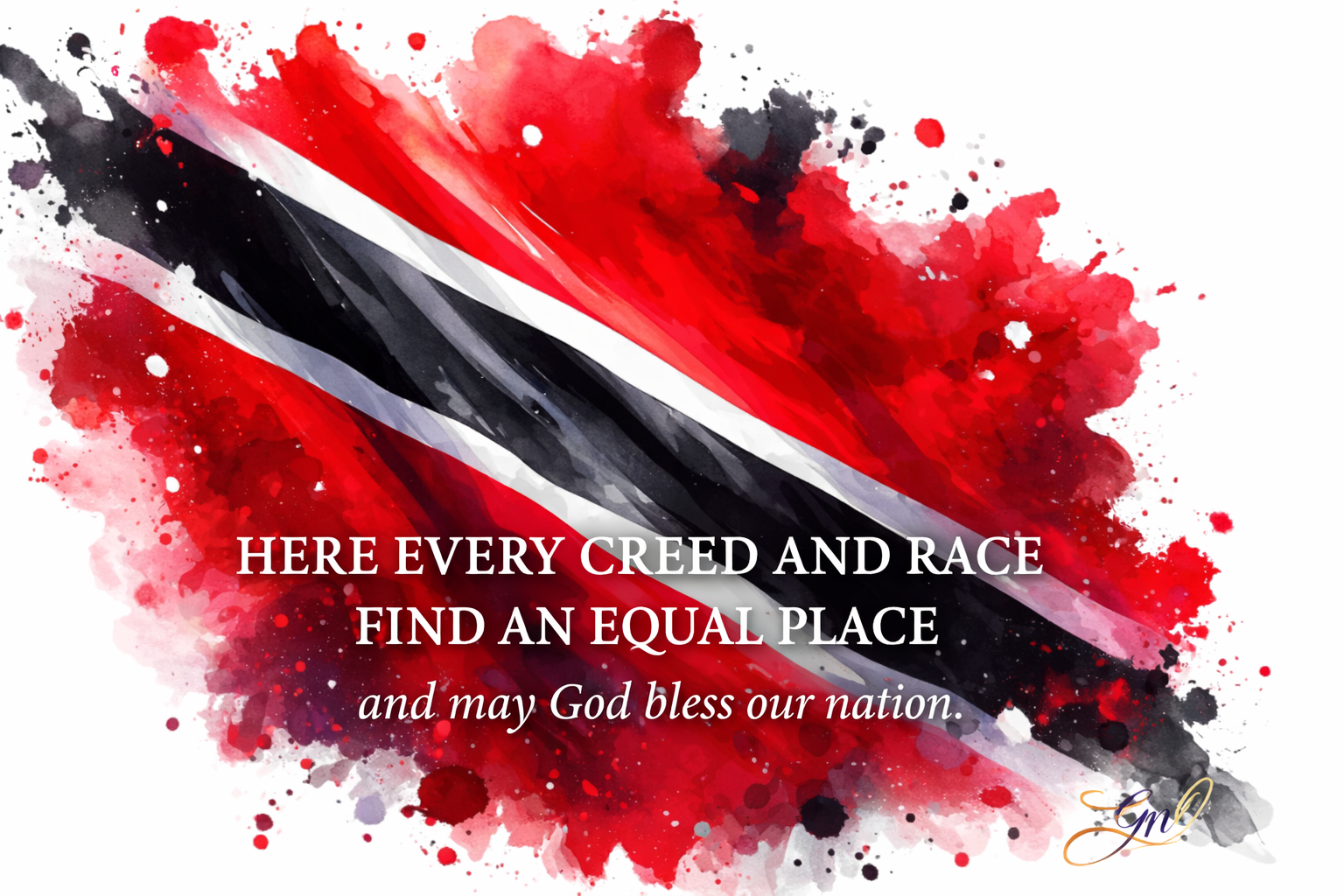
islands of the blue Caribbean Sea…HERE EVERY CREED AND RACE FIND AN EQUAL PLACE.
That is not decoration. That is doctrine. That is who we are.
From Caripachaima to Laventille, our families are not isolated stories we are braided histories. Many of us carry the evidence in our bloodlines: African, Indian, Chinese, European, Syrian-Lebanese, Indigenous roots, and every combination in between. Names like Fong, Indrani, Smith, Alvarez — none of them cancels the other. Together, they are the palette of the nation.