This essay is not written from expertise or institutional authority. It is written to assert what demands attention and invite reflection.
From the position of a layperson who has been, by her own admission, insufficiently engaged in the long arc of Israel–Palestine oversight even as the United States and the global order repeatedly convulse around it. That absence does not produce clarity; it produces dissonance. And it is from that dissonance that questions arise, unpolished but sincere.
The question that keeps returning quietly, persistently is not theatrical. It is civic. It is practical. It is about proximity and consequence.
The Atmosphere We Are In
The world did not arrive at this moment by accident. Under the Trump administration, exhaustion was elevated into governance. Chaos was not incidental; it was performative. Norms were strained until they lost meaning. Spectacle replaced deliberation. Disruption became its own justification.
That posture did not disappear with a change of administration. It lingered as precedent, as permission, as proof that the abnormal could be normalized and sustained.
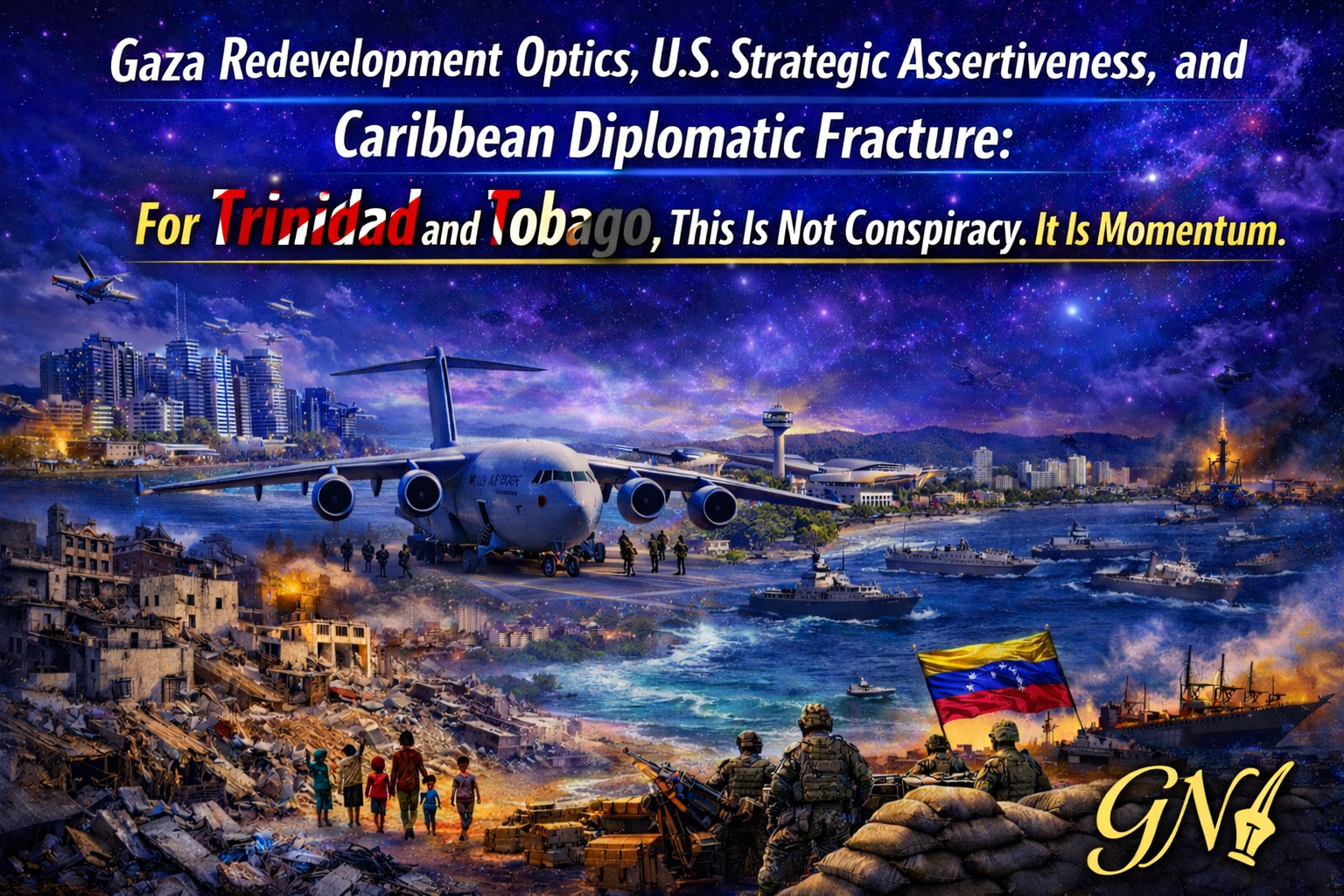
It is within this atmosphere that reporting surfaced of a Gaza redevelopment initiative described as “Project Sunrise,” estimated around US$112B over a decade, and reported as developed by a team led by Jared Kushner and U.S. Middle East envoy Steve Witkoff, as relayed by The Times of Israel citing The Wall Street Journal. [1]
The issue here is not whether Gaza will one day need rebuilding. It will. The issue is optics. When devastation is reframed as opportunity before justice is resolved; when displacement becomes a development variable; when human loss is abstracted into renderings and investment language the signal sent is not renewal, but comfort with redesigning reality after rupture.
Dogma Versus Political Reality
Religious language hovers persistently over Israel–Palestine, but it does not govern it. States act for power, security, leverage, and alignment. Faith is often invoked not as cause, but as cover a way to sanctify decisions that would otherwise demand moral reckoning.
What repels many observers is not belief itself, but the ease with which suffering is framed as inevitable and strategy is shielded from scrutiny by inherited narratives. The dissonance lies between dogma invoked and politics practiced.