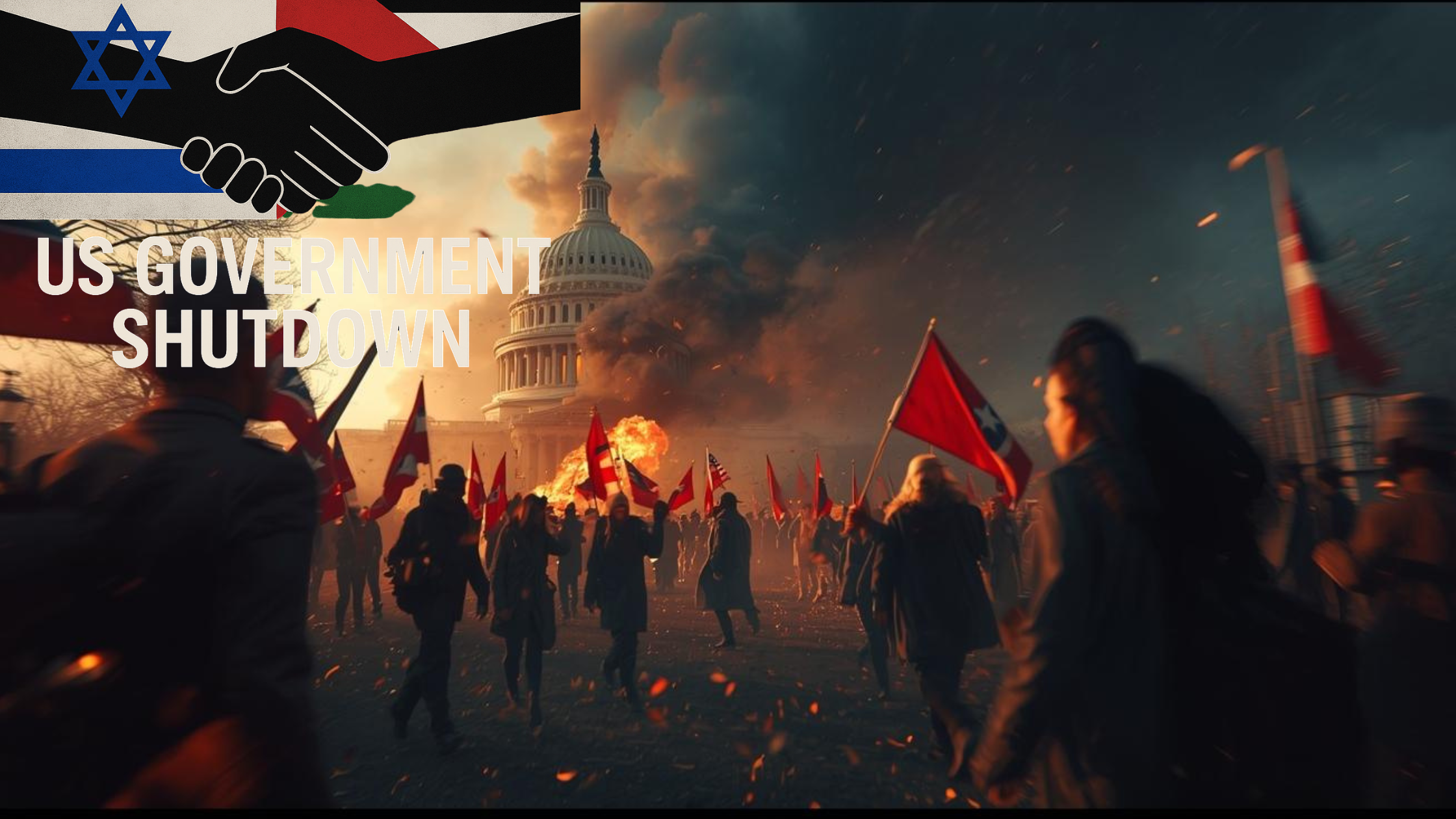
There is a fine line between truth and its staging. We live in an era where newsrooms, influencers, and digital oracles perform as rival choirs, each singing its own hymn of righteousness. Depending on where we listen, we are either saved or condemned by our political preferences. And so, when the spectacle of a “Peace Signing Agreement” in the Middle East floods our screens flags, handshakes, released hostages, tears it feels momentous. Yet, beneath the choreography, we must ask: what peace, and whose peace, are we applauding?
The Theatre of Accord
What was celebrated this week was not a final peace treaty between Israel and Gaza, but a ceasefire and prisoner–hostage exchange—a pause brokered mainly by Qatar, Egypt, and the United States. These mediators Qatar’s leadership, Egypt’s intelligence chief Abbas Kamel, Israel’s Mossad director David Barnea, and U.S. CIA leadership have quietly shaped each round of negotiation.
Trump’s presence at the ceremonial signing is symbolic, not structural. The months of shuttle diplomacy that built this framework existed long before the cameras rolled; the Qatar–Egypt–U.S. channel produced the template first seen in late 2023. This is not a revival of the Abraham Accords; it is a limited humanitarian arrangement intended to exchange lives and ease siege conditions.
- Releases of the final Israeli hostages in exchange for roughly 1,900–2,000 Palestinian detainees.
- Initiation of remains recovery and partial troop repositioning, with many details unsettled.
- Humanitarian scale-up commitments that remain fragile and contingent.
Even optimistic briefings admit this is a first stage, not full peace. The deeper structure governance of Gaza, durable security, accountability, and reconstruction remains unresolved.