Grace Notes in Context · September 11 Remembrance
Most of us Trinis might possibly not know how incredibly our own lineage is woven into the story of the worst nightmare to have occurred in that mecca of international congruence we call New York City. If we believe the words of our own Trinidad and Tobago national anthem, “where every creed and race find an equal place,” New York City in so many ways epitomizes that extraordinary convergence, where foreigners from every point of the globe congregate in this epicenter and somehow create a home away from home. They arrive carrying accents, cultures, religions, memories, aspirations and dreams, and on September 11, 2001, people from across that human spectrum suddenly shared the same terrifying vulnerability.
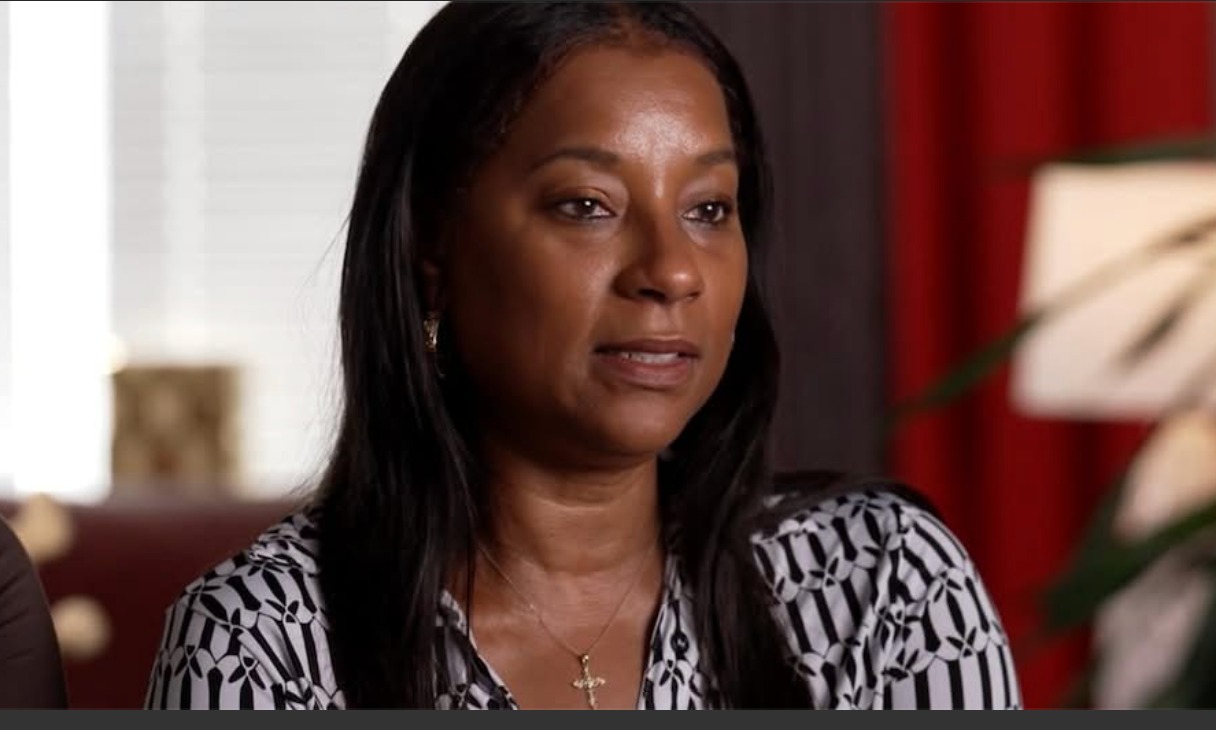
Somewhere beneath the collapsed North Tower was one of us, Genelle Guzman-McMillan, a Trinidad-born woman buried beneath an unimaginable mountain of steel, concrete, glass, dust and human devastation for approximately 27 hours before being rescued, widely documented as the final survivor pulled alive from the ruins of the World Trade Center. I cannot even fathom what kept her human spirit alive beneath what had only moments before been one of the tallest buildings dominating the New York skyline, pinned inside its remains, surrounded by darkness and devastation, yet somehow still breathing, still thinking, still praying, still holding onto something beyond what her physical circumstances could possibly have promised her.
What tells us, when everything tangible says there is no hope, to keep hoping?
And this is where Genelle’s story reaches somewhere deeply intimate within me, beyond the historical account of 9/11 and into that profound mystery of the human spirit. Whether you practice faith, question faith, struggle with doubt, or are atheist, there remains something almost impossible to reconcile about this woman being alive today in body and flesh. We can speak of physiology, circumstance, the extraordinary endurance of the human body and the relentless courage of rescuers, but somewhere within all of that exists an intangible place between what appears humanly possible and what nevertheless happens.
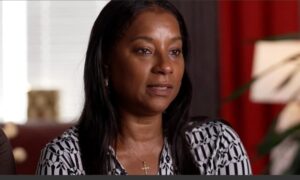
We give that intangible different names according to what we believe: faith, providence, instinct, grace, the human will to survive, or God. Genelle has her own interpretation, and the accompanying video is important to me precisely because she tells us herself how she understood those darkest hours and the extraordinary circumstances surrounding the moment she was found. Her faith belongs to her, her testimony belongs to her, and I have no need to decode it for her or to make her experience prove anything for anybody else. What overwhelms me is simply that when virtually everything tangible surrounding this woman represented death and destruction, she experienced something intangible as real enough to keep her holding on.
In the darkness there was, in Genelle’s telling, a presence, a voice, a touch, a hand, and whatever interpretation any of us might bring to that moment, there is something profoundly human and, according to Genelle’s own faith, profoundly spiritual in what she describes. Sometimes hope does not arrive with evidence that everything is going to be all right; sometimes hope arrives when there is absolutely no evidence at all, when reason itself would seem to have abandoned the possibility of tomorrow, and yet something within us — or beyond us — whispers that we must take one more breath.
THAT IS THE IMPOSSIBLE HOPE IN THE INTANGIBLE.
As the tragedy of 9/11 remains a haunting remembrance of death, despair, hopeless sorrow and lives forever changed, somewhere within that devastation there was also this extraordinary moment where light, in the form Genelle herself describes, entered darkness. There is something almost overwhelming to me in knowing that beneath that enormous graveyard of steel and concrete, beneath everything that said life could not possibly remain there, was the living breath of this daughter of Trinidad and Tobago, and somehow that breath endured.
There is another symbolism here that I cannot escape. Genelle was an immigrant, a foreigner who had come from our little twin-island nation and made another home in America, as millions have done before and after her. Yet beneath that rubble nobody was foreign. Nobody being searched for first had to prove where they were born, what religion they practiced, what language they spoke, the color of their skin, how they voted, or whether their lineage began somewhere else. There was only the possibility that a human being might still be alive, and so people kept digging. To me, that is also the hope of what America, the United States of America, is meant to be.
And so my remembrance of Genelle becomes something even more personal and sacred. I share an emotional tribute to the miracle that continues to live through the person of Genelle Guzman-McMillan, and from one Trinbagonian to another, I send her my deepest appreciation and humble gratitude for allowing us through her testimony to witness something so profoundly beyond ordinary understanding. There is an intimate pride in knowing that one of ours was there, not pride born from tragedy, but a sacred recognition that a Trinidad-born woman reached the absolute boundary between hope and hopelessness, emerged from that darkness alive, and has been able to tell the world what those moments meant to her.
Genelle, you survived what most of us cannot even permit our minds to imagine, and you emerged carrying a testimony that does not require any of us to agree upon its explanation in order to stand humbly before its mystery. For those who believe, there is God; for those who question, there is wonder; and for all of us there remains the living presence of a woman who was there, who experienced it, who survived it and who can tell us in her own words what she believes happened when the darkness finally gave way to rescue.
As a Trinbagonian, that touches somewhere especially sacred within me, because through the blessing of shared birthplace, heritage and belonging, I can look at Genelle’s story and quietly recognize that one of us was there, one of us came through, and one of us lived to tell the story. We cannot claim her miracle as ours, nor should we, but we can honor it, bear witness to it and give thanks for being allowed to glimpse through her life something that may remain forever beyond our ability to completely explain.